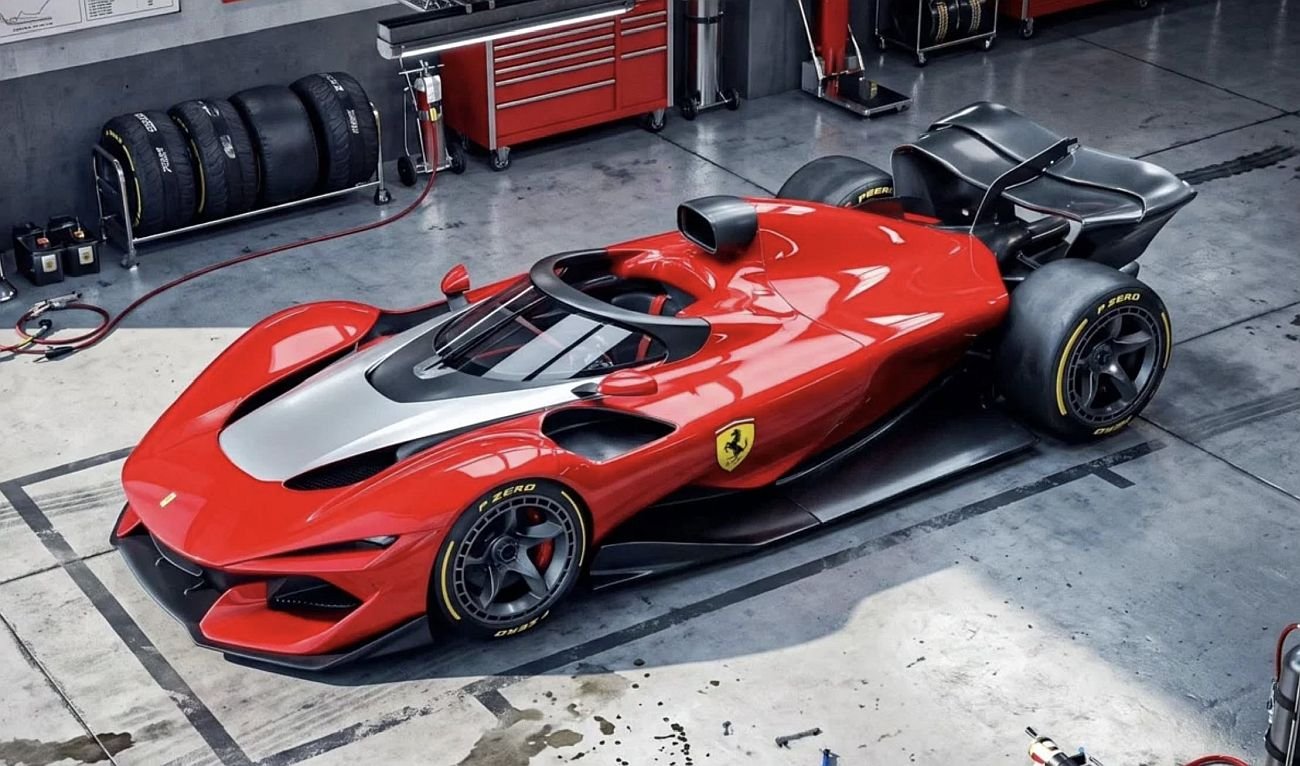
Formula 1 cars have become extraordinarily sophisticated machines, but aerodynamic necessity has also turned them into collections of wings, flaps, fences and carefully managed surfaces. Italian designer Luca Serafini of LS Design imagines a different direction with this unofficial Ferrari single-seater concept: fewer visual distractions, cleaner volumes and enough Rosso Corsa bodywork to make it look more like a sculpture than an engineering diagram.
The most striking element is the way the body seems to flow continuously from the needle-like nose toward the cockpit and muscular rear section. Rather than leaving every mechanical component visually exposed, Serafini wraps the chassis in voluptuous surfaces that wouldn’t look completely out of place on a Ferrari road-going hypercar. Huge sculpted channels carve into the sides, while black aerodynamic elements underneath create the impression that the red upper body is almost floating above the floor.

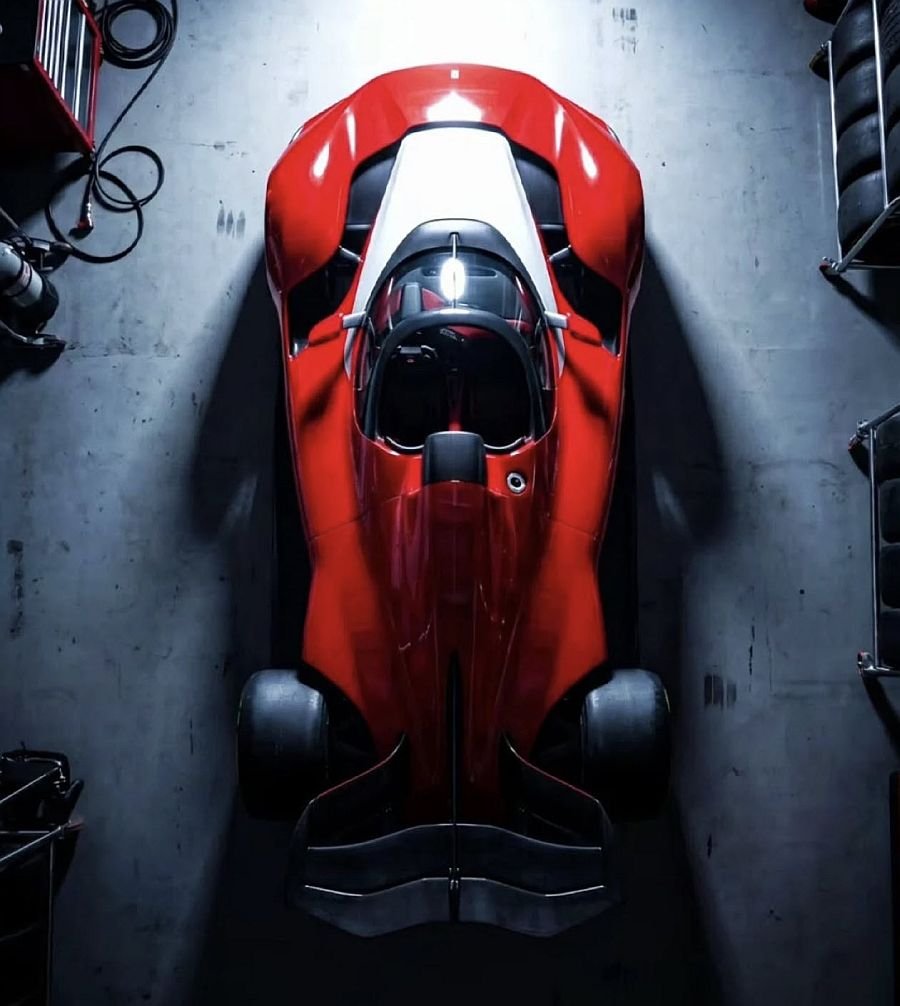
There are some wonderful retro touches, too. A white stripe runs from the nose toward the cockpit, recalling classic Ferrari racing machinery without turning the car into a nostalgia exercise. Behind the driver sits a prominent periscope-like air intake reminiscent of 1970s Formula 1 cars, while five-spoke center-lock wheels and chunky Pirelli slicks give the concept just enough contemporary racing credibility. The enormous swan-neck rear wing is one of the few deliberately technical-looking elements, contrasting sharply with the otherwise organic body.
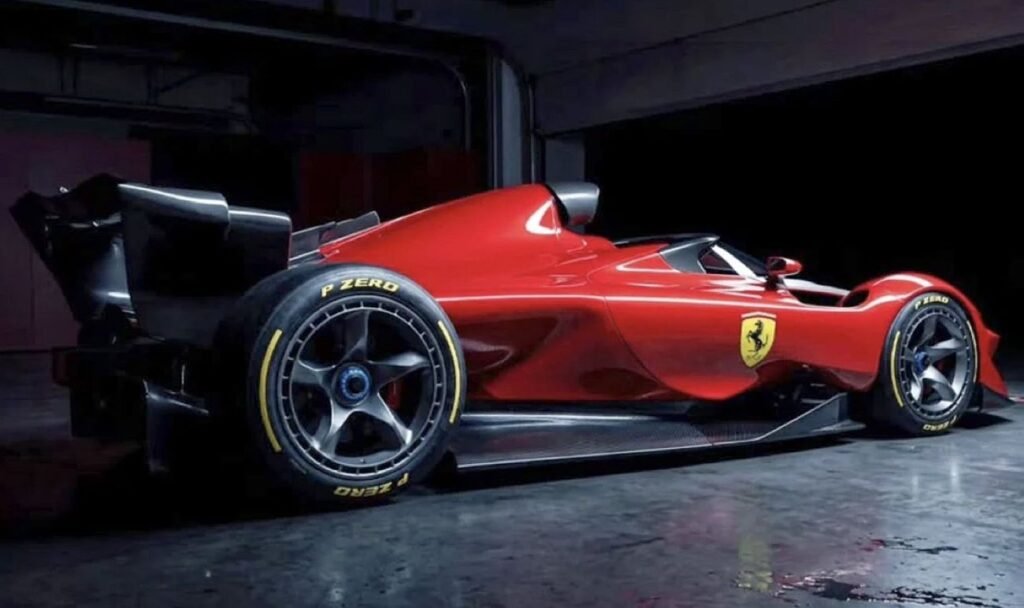
And then there’s the cockpit. The traditional F1 Halo is gone, replaced by a low, swept screen surrounding the driver. Visually, it transforms the entire car. The cockpit becomes part of the body rather than appearing to have a protective structure placed on top of it, giving the Ferrari an exceptionally low and uninterrupted silhouette. Of course, this is also where fantasy collides with reality: the Halo exists for very serious safety reasons, and such a solution couldn’t simply replace it under current Formula 1 regulations.
That distinction matters because Serafini’s creation isn’t really a proposal for Ferrari’s next Grand Prix car. The 2026 Formula 1 regulations demand an entirely different set of compromises, with designers chasing aerodynamic efficiency, reduced dimensions and lower weight rather than uninterrupted surfaces. Real racing cars need every legal tenth of a second they can find, even if achieving it means adding visual complexity that an industrial designer would rather remove.
via Yanko Design