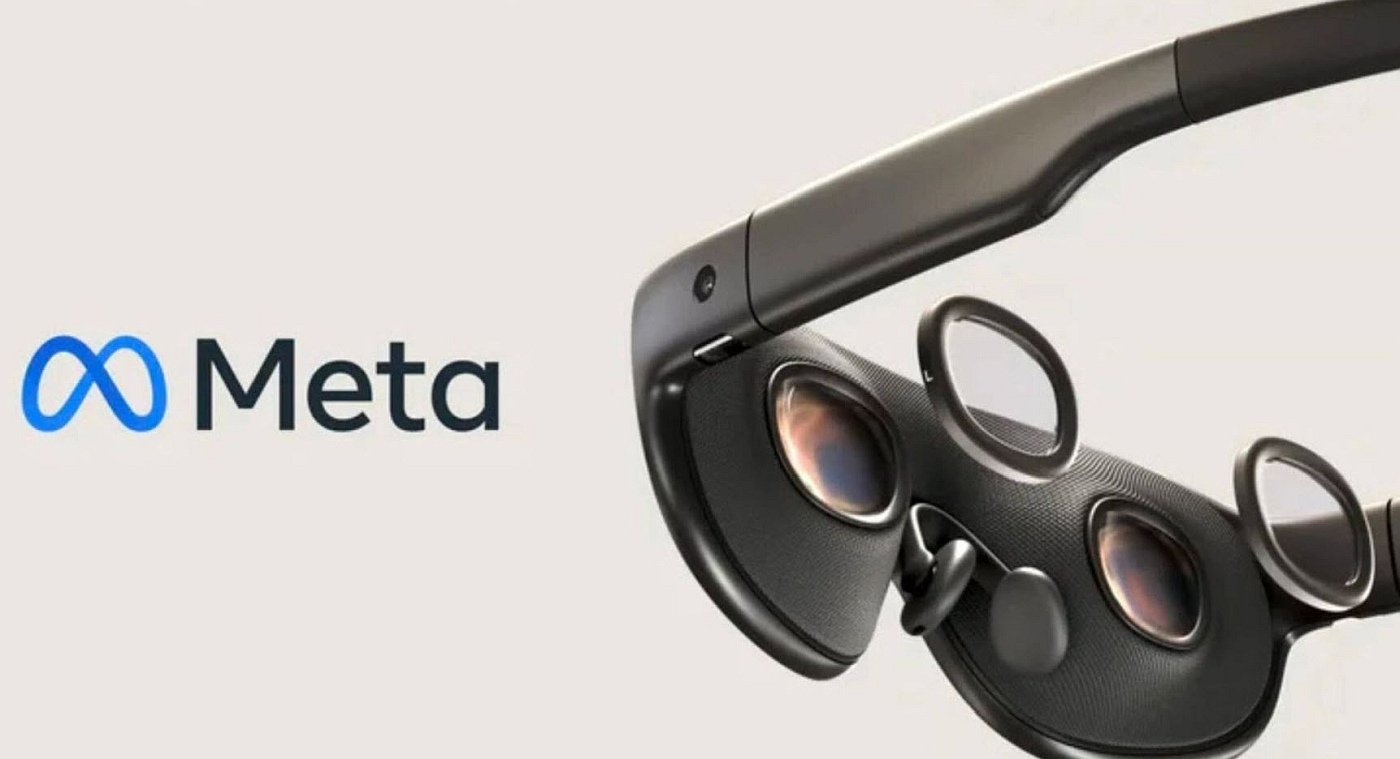
Meta’s Project Phoenix headset has appeared in leaked images ahead of Connect 2026, revealing a dramatic departure from the bulky Quest formula. Instead of a large visor strapped to the user’s face, Phoenix adopts a slimmer, glasses-inspired silhouette designed to bring mixed reality hardware closer to something people could comfortably wear for longer sessions.
The most distinctive elements are its thick, sculpted arms, which flow into a compact frame surrounding the optical modules. Meta has not completely hidden the technology—the lenses, cameras and sensors remain visibly functional parts of the design—but the rounded corners and smooth transitions give Phoenix a more polished, wearable appearance. It feels less like a traditional VR headset and more like an experimental pair of industrial smart glasses.
A cable extending from the frame suggests that Meta has moved some components into a separate computing puck. Although carrying another device introduces its own inconvenience, separating the processor and battery from the glasses could substantially reduce pressure on the user’s face. The approach also explains why Phoenix appears considerably thinner than the Quest 3 and other self-contained mixed reality headsets.
Dedicated motion controllers are also absent from the leaked materials. Phoenix is reportedly being designed around hand tracking, potentially using its outward-facing cameras to detect gestures and map the surrounding environment. This controller-free approach fits the product’s lighter visual identity and could make mixed reality feel more immediate, although its precision remains unknown.
The images were reportedly discovered inside Meta’s briefly available HorizonOS Prescription Lens application, suggesting that support for corrective lens inserts is already being prepared. Meta could preview Project Phoenix during Connect on September 23, but previous reports indicate that a commercial launch may not happen until the first half of 2027. Until then, its final design and specifications remain unconfirmed.